
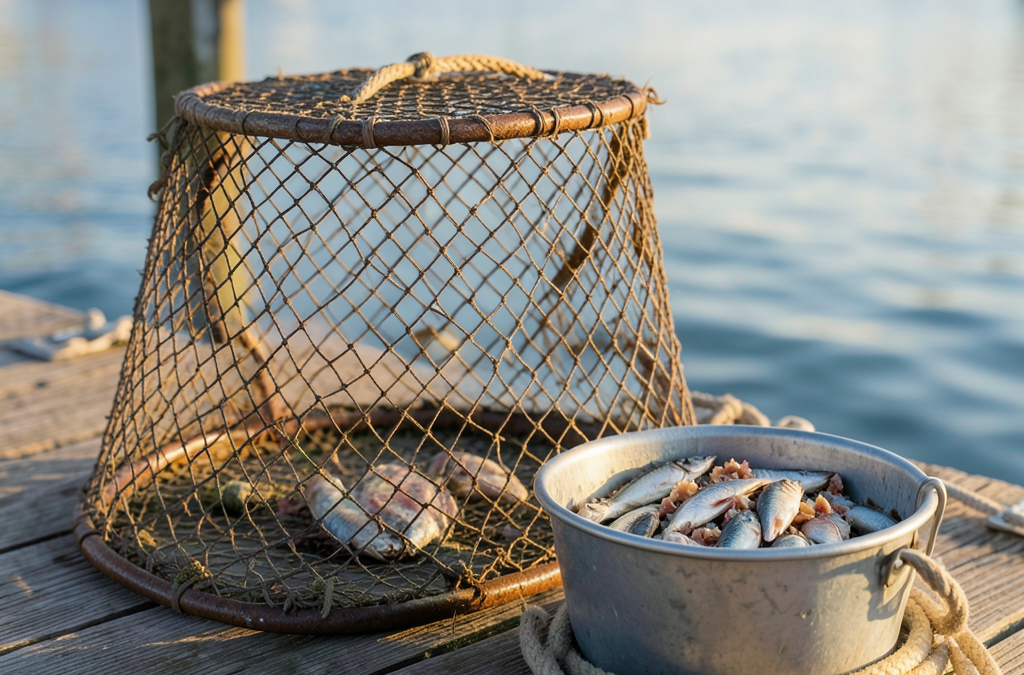
The Ultimate Guide to Sustainable Bait for Crustaceans
Introduction to Sustainable Bait for Crustaceans
The Ultimate Guide to Sustainable Bait for Crustaceans starts with a practical observation: a trap is only as effective as the scent trail that leads animals into it, and that scent trail should not come at the expense of the habitat you rely on. Whether you set pots for crabs, lobsters, crayfish, or shrimp, bait decisions influence catch rates, bycatch, water quality, operating costs, and the long-term health of the fishery. A bait that performs well but breaks down into persistent pollution is not truly efficient, and a bait that is environmentally friendly but releases no useful attractant will not keep traps working. The balance between attraction, durability, biodegradability, and responsible sourcing is the heart of modern crustacean trapping.
Many anglers and trap fishers inherit bait habits from older generations: oily fish, salted scraps, animal hides, or whatever is cheap and available. Those materials can still work, but the context has changed. Coastal managers pay closer attention to nutrient loading, ghost gear, and non-target catch; markets increasingly reward responsible harvesting; and fishers face higher costs for fuel, gear, and time on the water. This guide explains how to evaluate bait through an environmental and operational lens, so you can make choices that are both practical and defensible.
You will learn what makes bait sustainable, how crustacean senses respond to different attractants, how to match bait to species and trap design, how to source or prepare bait responsibly, and how to test performance without wasting money. The strongest bait strategy is not the one that smells the most; it is the one that delivers a consistent, targeted scent plume for the right soak time while remaining safe for the ecosystem. By the end, you should have a framework for choosing and managing bait that supports better catches and cleaner waters.
What Makes Sustainable Bait for Crustaceans Work?
Sustainability in bait is a system property, not a single label. A bait can be natural and still be unsustainable if it is harvested destructively, transported long distances, or over-applied. Conversely, a formulated bait can be responsible if it uses credible byproducts, breaks down safely, and reduces the amount of organic waste entering the water. The practical question is whether the bait delivers attractant value with the smallest reasonable ecological footprint across its full life cycle.
Four criteria matter most: sourcing, biodegradability, target specificity, and performance per unit. Sourcing asks where the material comes from and whether it supports waste reduction or creates new pressure on wild stocks. Biodegradability asks what remains after the soak and whether the breakdown process consumes oxygen or introduces contaminants. Target specificity asks whether the bait attracts the intended crustaceans without drawing in large numbers of non-target fish or predators. Performance per unit asks how much attraction you get per kilogram, per dollar, and per soak. These criteria often pull in different directions, so good decisions require trade-offs rather than a perfect product.
Bait sustainability is achieved when the attractant is effective enough to reduce soak time and waste, clean enough to break down without harming the habitat, and sourced in a way that does not undermine the fishery. A bait that requires three times as much material to achieve the same catch is not automatically better simply because it is marketed as natural. Likewise, a highly durable synthetic bait may reduce repeated baiting, but it can create persistent litter if it escapes or is discarded. The aim is to minimize total impact, not to win a single-issue argument.
- Use byproducts first: fish frames, skins, shellfish shells, and processing trimmings can provide strong attraction while avoiding additional harvest pressure.
- Prefer local and seasonal sources: shorter transport chains reduce fuel use and keep bait fresher, which often improves handling and scent release.
- Avoid persistent materials: never use plastic mesh, rubber bands, foam, or synthetic string as bait holders unless they are securely retained and reused.
- Match bait to soak time: fast-release baits suit short sets, while slower-release blocks or cured materials suit longer soaks.
- Respect local rules: some areas restrict bait types, baiting methods, or the use of fish byproducts for biosecurity reasons.
A simple comparison helps clarify the trade-offs. The table below is not a ranking; it is a decision aid that should be adapted to your species, water temperature, trap style, and regulations.
| Bait category | Main strengths | Key watch-outs |
|---|---|---|
| Local fish scraps and frames | Strong scent, low cost, often available as byproduct | Can attract non-targets, decomposes quickly in warm water, requires secure bait holders |
| Shellfish waste and crushed shells | Effective for many crabs and lobsters, uses processing waste | Sharp edges, nutrient loading if overused, seasonal availability |
| Plant-based or grain-based cakes | Biodegradable, predictable release, useful in some freshwater crayfish fisheries | Lower attraction for some marine species, may need blending with stronger attractants |
| Formulated slow-release blocks | Consistent soak performance, reduced handling, measurable use rates | Check ingredients and breakdown behavior, avoid persistent binders, cost per soak can be high |
| Cured or salted natural baits | Longer shelf life, slower release, convenient storage | Salt can be an environmental concern in sensitive waters, curing quality varies |
Why Eco-Friendly Crustacean Attractants Matter
Eco-friendly crustacean attractants matter because traps fish by chemistry and hydrology. Crustaceans detect dissolved molecules through chemosensory structures, and currents carry those molecules away from the bait. If the bait releases a large pulse of organic matter, it can create a local oxygen demand as microbes break it down; if it releases persistent synthetic material, it can remain in the environment long after the trap is hauled. Responsible attractants aim to create a useful scent plume while minimizing these side effects.
The operational benefits are just as important as the ecological ones. Better bait management can reduce the amount of bait carried to sea, shorten ineffective soaks, lower fuel use, and decrease the handling of spoiled material. It can also reduce bycatch when bait is placed and secured in ways that discourage non-target fish from tearing it apart. In fisheries where escape gaps and biodegradable panels are already used to reduce ghost fishing, bait choices should support the same responsible approach rather than working against it.
Mixed-species fisheries need extra care. A crab pot and an octopus shelter may both depend on scent and structure, but the bait handling and rope systems differ. If you also work in mixed coastal waters, reviewing octopus fishing techniques and bait setups can help you compare how durable attractants and rope handling are managed in adjacent trap fisheries. The lesson is to treat bait as part of a complete gear system, not as an isolated purchase.
- Cleaner water: Less rotting organic matter and fewer synthetic fragments reduce local nutrient and debris pressure.
- Lower bycatch risk: Secure, species-appropriate bait can reduce the frenzy that tears bait free and attracts non-target fish.
- Better economics: Using the right amount of bait per soak avoids waste and improves catch per unit effort.
- Regulatory resilience: Fisheries with stricter bait and gear rules favor fishers who can document responsible practices.
- Market confidence: Seafood buyers increasingly ask about ghost gear, habitat impact, and responsible sourcing.
Choosing eco-friendly crustacean attractants is ultimately a risk-management decision: it reduces pollution, bycatch, and wasted effort while protecting the resource that makes trapping possible. That does not mean every natural material is automatically safe, or every synthetic product is automatically harmful. It means the burden of proof should sit with the bait system: what it is made from, how it behaves in water, how it is secured, and what happens when it is lost.
Choosing Sustainable Bait by Crustacean Species
Crustaceans do not all forage in the same way. Crabs are often scavengers and opportunistic predators; lobsters are strong chemosensory foragers that investigate odor plumes; crayfish are freshwater scavengers with strong responses to animal matter; and many shrimp are small, abundant, and highly responsive to fine particulate attractants. A bait that works well for one group may be ignored by another, or it may attract the wrong animals. Species matching is therefore a core part of sustainable bait selection.
Match Bait to Foraging Strategy
For crabs, strong oily fish byproducts, crushed shellfish, and cured natural baits are common choices because they release persistent scent and resist being pulled apart. Lobsters often respond to fresh fish frames, shellfish waste, and formulated blocks that keep releasing attractant through longer soaks. Crayfish in freshwater systems may take fish scraps, plant-based cakes, or blended attractants, depending on local availability and regulations. Shrimp fisheries vary widely, but fine-grained or slow-release attractants can be more appropriate than large chunks that are quickly consumed by other organisms.
The table below offers a starting point for matching bait type to target species and typical trap conditions. It should be adjusted for water temperature, current, depth, and local rules, because these factors change scent dispersion and decomposition rates.
| Target crustacean | Promising sustainable bait approach | Operational notes | What to monitor |
|---|---|---|---|
| Crabs | Local fish frames, crushed shellfish waste, cured fish baits | Use secure bait boxes; strong currents can dilute scent quickly | Bait loss, non-target fish, shell damage, soak time |
| Lobsters | Fresh fish byproducts, shellfish waste, slow-release blocks | Longer soaks require bait that holds together and keeps releasing odor | Entry rate, escape-gap performance, bait remaining |
| Crayfish | Fish scraps, plant-based cakes, blended local byproducts | Freshwater decomposition can be fast in warm conditions | Oxygen-sensitive waters, local rules, trap fouling |
| Shrimp | Fine particulate attractants, formulated blocks, small bait portions | Trap mesh and bait particle size must match the target | Bycatch composition, bait washout, current speed |
There is no universal crustacean trap bait, but there are reliable principles. First, match release rate to soak time: fast-release bait for short sets, slower release for longer sets. Second, match particle size to the target and trap mesh so attractant stays available rather than washing away. Third, use the smallest amount that produces a clear plume; more bait is not automatically better if it overwhelms the trap or attracts non-targets. The best species-specific bait is the one that keeps the target investigating the trap while giving non-target animals less opportunity to dominate the bait.
- Crabs: test one bait type per string and record catch and bait loss.
- Lobsters: prioritize bait security and slow release for overnight or multi-day soaks.
- Crayfish: avoid overbaiting warm, low-oxygen water; small frequent sets can outperform long soaks.
- Shrimp: use finer attractants and check mesh size to reduce catch of undersized animals.
- Mixed fisheries: separate trap types and bait regimes so you can learn what each target responds to.
Trap Design and Gear for Responsible Crustacean Fishing
Bait does not work in isolation. Trap design controls how scent escapes, how animals enter, how bait is protected, and how non-target species escape. A perfect bait in a poorly designed trap will still produce disappointing results. Responsible crustacean fishing therefore pairs bait choices with gear choices: secure bait holders, appropriate mesh, escape gaps, and biodegradable or corrodible panels where required.
Bait Security and Escape Gaps
Bait security is especially important with natural materials that can be torn apart. A bait box or mesh bag should allow water flow while preventing fish from stripping the bait in minutes. However, the holder itself must not become persistent litter if it is lost. Reusable holders are preferable, and any tie or closure should be inspected before every set. Escape gaps and biodegradable panels are also part of the same responsible system because they reduce the impact of lost traps and allow undersized animals to leave.
For lobster-specific fisheries, it is worth comparing purpose-built trap features rather than adapting a generic pot. A Scottish lobster trap design can illustrate how entry funnels, frame strength, and escape provisions work together to support selective trapping. The same principles apply to other crustacean traps: design for the target, provide an exit for the wrong catch, and make bait access easy for the fisher but difficult for scavengers.
- Use a reusable bait holder: secure bait in a flow-through container that can be opened, cleaned, and inspected.
- Check escape gaps: confirm size and placement meet local rules and allow undersized crustaceans to leave.
- Inspect frames and mesh: repair holes before they become bycatch or loss pathways.
- Mark gear clearly: follow local marking rules to reduce gear conflicts and ghost gear.
- Avoid overloading: too much bait can attract non-targets and reduce water flow through the trap.
Gear and bait must be designed as one system: secure bait improves selectivity, and selective traps make every unit of bait more productive. When testing changes, alter only one factor at a time. If you change bait type, trap position, and soak length simultaneously, you cannot tell which change caused the result. Keep a simple log of bait, soak time, depth, current, catch, bycatch, and bait remaining so that your observations become useful evidence.
How to Source, Make, and Store Sustainable Bait
Sourcing and preparation are where many sustainability intentions succeed or fail. The most responsible bait is often a local byproduct that would otherwise become waste: fish frames from a reputable processor, shellfish waste from a licensed operation, or plant-based ingredients grown for feed. The key is to verify freshness, avoid contaminated material, and follow biosecurity rules that prevent the spread of disease or invasive species.
Bait Preparation and Curing
Preparation should improve bait performance without creating environmental problems. Grinding or crushing increases surface area and scent release but can also cause rapid washout, so it is best for short soaks or for blending into a slower-release matrix. Curing with salt can extend shelf life, but in enclosed or sensitive waters the salt load may be undesirable. Freezing is often a cleaner way to preserve bait, provided it is thawed and handled hygienically before use.
- Identify a legitimate local source: ask processors, markets, or permitted suppliers about byproducts and confirm they are fit for bait use.
- Separate bait from contaminants: remove packaging, hooks, plastic, and any material that could persist in the environment.
- Choose a preservation method: freeze, chill, or cure according to the expected storage time and local climate.
- Prepare the right particle size: use chunks for secure bait holders and finer blends for slow-release or short-soak applications.
- Label and rotate stock: use older bait first and discard spoiled material responsibly, never at sea.
- Test a small batch: compare catch, bycatch, and bait remaining before committing to a large supply.
Storage and handling also affect the gear around the bait. Hauling lines, bait rigging, and trap fastenings should be chosen for durability and safe disposal. For example, high-density polyethylene rope is commonly used for strength and abrasion resistance, but it must be inspected, replaced when worn, and kept out of the water if it is no longer serviceable. Durable rope reduces gear loss, yet it is not biodegradable, so responsible use means maintenance and recovery rather than abandonment.
Good bait preparation is a form of waste prevention: it reduces spoilage, improves release control, and ensures that only useful attractant enters the water. Keep preparation areas clean and separate from food handling areas. If you make formulated bait, record the ingredients and test how the block breaks down in a bucket of local water before using it in traps. A bait that crumbles immediately or remains intact for weeks may both be mismatched to your soak time.
Practical Field Tips, Mistakes, and Performance Checks
Field performance is the final test of any bait strategy. Even a well-researched bait can fail if it is used in the wrong place, at the wrong soak time, or with the wrong trap. The most useful habit is to treat every set as a small experiment with a record. Note the target species, bait type and amount, soak duration, depth, current, water temperature, catch, bycatch, and how much bait remained. Over several trips, patterns emerge that no product label can provide.
Common mistakes include overbaiting, using bait that washes out too quickly, ignoring current direction, and failing to secure bait against scavengers. Another frequent error is changing too many variables at once. If you buy a new trap, switch bait, and move to a new location on the same day, you cannot learn which factor mattered. Reliable testing requires a baseline and controlled comparisons. It also requires patience: crustacean movements vary with season, molt stage, water temperature, and lunar cycles, so a single weak set is not proof that a bait is poor.
Field Checklist for Responsible Baiting
- Set a baseline: record your current bait, soak time, and average catch before testing a new option.
- Use the smallest effective amount: increase only if bait is fully depleted and catch is low.
- Secure bait against scavengers: use a reusable bait holder and check it before every set.
- Match soak to release rate: short sets for fast-release bait, longer sets for slow-release blocks.
- Protect sensitive habitats: avoid setting on fragile seagrass, coral, or rocky nursery areas where gear can snag.
- Recover lost gear when safe: carry a grapple or hook where local rules allow and conditions are safe.
- Review bycatch: if non-target catch rises, change bait placement, amount, or soak time before increasing effort.
A responsible bait test changes one variable at a time and measures both target catch and environmental cost, because a higher catch achieved through more bycatch or gear loss is not an improvement. Also consider how eco-friendly crustacean attractants fit your broader operation: fuel use, trip frequency, and gear maintenance all affect the true footprint of a trap fishery. A bait that costs slightly more but reduces ineffective soaks may be the better choice. Similarly, lobster and crab trapping operations that maintain escape gaps, mark gear, and retrieve lost pots are already reducing impact; bait should reinforce that discipline.
Finally, treat regulations as a floor, not a ceiling. Local rules may specify bait types, marking, escape gaps, or closed seasons, but they cannot cover every local condition. If a bait attracts large numbers of non-target fish, fouls the water, or leaves persistent residue, stop using it even if it is technically allowed. The same applies to gear: a legal trap can still be poorly sited. Good field judgment is part of sustainability, and it is built through observation, record keeping, and willingness to adjust.
Conclusion: Build a More Sustainable Crustacean Bait Strategy
The Ultimate Guide to Sustainable Bait for Crustaceans comes down to a practical loop: choose responsibly sourced bait, match it to the target species and soak time, secure it in the trap, and measure what happens. No single material is perfect for every fishery, but the best choices share common traits. They use byproducts or low-impact ingredients, release attractant at a useful rate, break down without persistent pollution, and support selective trapping rather than indiscriminate feeding.
Start with one change rather than a complete overhaul. Test a local fish byproduct against your current bait, or compare a slow-release block with a cured natural bait over the same soak length. Record catch, bycatch, bait remaining, and gear condition. Over time, you will build a bait strategy that is tailored to your water, your target species, and your operational constraints. That is more valuable than any generic recommendation, because sustainability is always local in practice.
Use this guide as a framework, not a rulebook. Check local regulations, ask suppliers about sourcing, maintain your traps and ropes, and keep learning from each set. When you choose bait that respects the habitat and the resource, you protect the future of crustacean fishing while improving the efficiency of your own operation. The ultimate guide to sustainable bait for crustaceans is ultimately a guide to better decisions on the water, one soak at a time.