
7 Facts: Why Sustainable Bait is Better for Marine Ecosystems
Understanding the Shift Toward Eco-Friendly Fishing Practices
Commercial and recreational anglers around the globe are increasingly examining Why Sustainable Bait is Better for Marine Ecosystems as ocean conservation becomes an urgent priority. Traditional fishing practices often rely heavily on harvesting wild forage fish to catch higher-value crustaceans and pelagic species, creating a severe imbalance in the aquatic food web. By shifting toward responsible alternatives, modern fisheries can maintain high catch rates without depleting the foundational species that marine predators rely upon for survival. In this comprehensive guide, you will learn the ecological mechanics behind bait selection, the biological advantages of eco-friendly alternatives, and practical steps to transition your operations.
The reliance on conventional bait sources like wild-caught mackerel, herring, and squid places immense pressure on fragile coastal environments. When millions of tons of small pelagic fish are removed from the water solely to be placed inside traps, the ripple effects are felt across every trophic level. Seabirds, marine mammals, and larger predatory fish lose their primary source of nutrition, leading to localized population declines and altered migration patterns. Understanding these interconnected dynamics is the first step for any fishing operation looking to safeguard its future livelihood while protecting ocean biodiversity.
Fortunately, advancements in marine science and aquaculture have paved the way for highly effective, environmentally conscious bait options. From repurposed fish processing byproducts to formulated biodegradable attractants, the industry is witnessing a revolution in how target species are lured. As we explore the scientific and economic arguments for this transition, it becomes clear that adopting responsible harvesting methods is no longer just an ethical choice, but a practical necessity for long-term maritime prosperity.
Why Sustainable Bait is Better for Marine Ecosystems and Trophic Balance
To truly grasp Why Sustainable Bait is Better for Marine Ecosystems, one must examine the critical role of forage fish within the oceanic food pyramid. Forage species serve as the primary energy transfer mechanism in marine environments, converting microscopic plankton into nutrient-dense biomass that sustains larger predators like tuna, cod, and sharks. When commercial operations extract vast quantities of these small fish purely for use as trap attractants, they effectively short-circuit the natural energy flow of the ocean. This trophic disruption prevents compromised ecosystems from recovering their historical biomass levels.
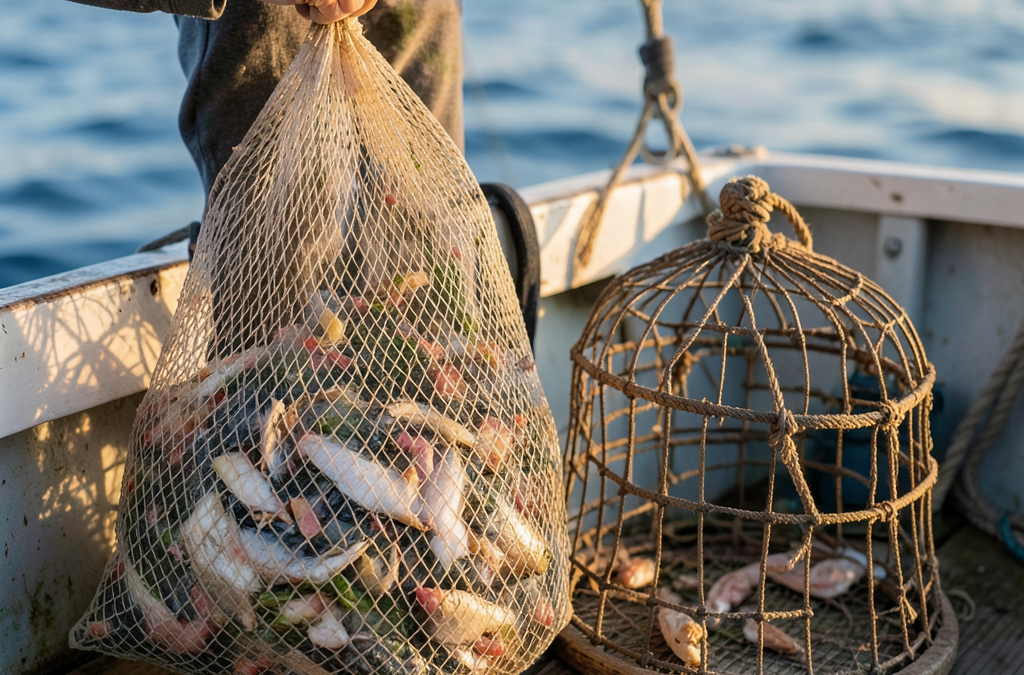
Furthermore, the practice of using edible, human-grade fish to catch smaller volumes of crustaceans represents a significant inefficiency in global protein production. In many traditional pot fisheries, the weight of the wild bait placed inside the traps often exceeds the weight of the target catch brought back to the dock. When outfitting a commercial traditional Scottish lobster pot for deep-water deployment, choosing an eco-friendly attractant ensures that harvesting high-value crustaceans does not come at the expense of vital pelagic fish stocks. Reducing the forage fish dependency ratio is essential for stabilizing global fisheries and ensuring food security for coastal communities.
By replacing wild-caught forage species with sustainable alternatives, anglers immediately alleviate harvesting pressure on vulnerable baitfish populations. Preserving the bottom tiers of the marine food web is the single most effective strategy for ensuring the resilience and abundance of top-tier commercial fish species. When forage fish are left in the ocean to fulfill their natural ecological roles, the entire marine habitat benefits from increased biodiversity, healthier predator populations, and greater resistance to environmental stressors like warming waters.
- Trophic Level Preservation: Leaving wild menhaden, sardines, and anchovies in the water ensures that native predatory fish have adequate nutrition to reproduce and thrive.
- Reduction of Bycatch in Bait Fisheries: Decreasing the demand for wild bait directly reduces the incidental capture of non-target species often caught in fine-mesh purse seines and trawls.
- Improved Biomass Conversion Ratios: Utilizing fish trimmings and agricultural byproducts stops the wasteful practice of using multiple pounds of wild fish to harvest a single pound of crab or lobster.
- Support for Seabird and Mammal Populations: Coastal wildlife such as puffins, gulls, seals, and whales depend directly on dense schools of surface-swimming baitfish for their survival during breeding seasons.
- Enhanced Ecosystem Resilience: Biodiverse oceans with intact food webs are scientifically proven to better withstand the impacts of climate change and ocean acidification.
The Hidden Environmental Costs of Conventional Bait Harvesting
Beyond the direct removal of biomass, conventional bait harvesting carries severe secondary environmental costs that often go unnoticed by the end consumer. One of the most pressing issues is the introduction of foreign pathogens and viral diseases into pristine local waters through the use of imported frozen bait. Global supply chains frequently ship frozen herring, squid, and mackerel across oceans, and when these raw tissues are submerged in local habitats, they can release non-native bacteria and parasites. These biological contaminants can devastate native crustacean and finfish populations that lack natural immunity to foreign diseases.
Additionally, the carbon footprint associated with catching, freezing, transporting, and storing traditional wild bait is astronomical. Industrial bait vessels consume vast quantities of marine diesel while pursuing pelagic schools, followed by months of energy-intensive deep-freezing in shore-side facilities before the product ever reaches a fisherman’s deck. In the recreational sector, the widespread use of non-biodegradable synthetic soft plastics adds another layer of ecological harm, as lost lures litter the seabed and introduce toxic phthalates and microplastics into the digestive tracts of opportunistic feeders.
Pathogen Transmission Risks in Local Waters
When raw, untreated marine tissues from one hemisphere are introduced into another, the biosecurity risks are profound. Viruses such as White Spot Syndrome in crustaceans or Viral Hemorrhagic Septicemia in finfish can survive the commercial freezing process and become active once thawed in warmer coastal waters. Sustainable bait manufacturers mitigate this threat by utilizing heat-treated processing offal, pasteurized marine proteins, or locally sourced terrestrial binders that are completely certified free of aquatic pathogens.
Eliminating the transboundary movement of raw, untreated baitfish is a crucial biosecurity measure that protects native aquaculture and wild stocks from catastrophic disease outbreaks. By switching to stabilized, regionally produced eco-friendly baits, fishermen act as stewards of their local waters, ensuring that their daily operations do not inadvertently introduce biological hazards that could collapse the very fishery they depend upon.
| Bait Category | Ecological Impact | Biosecurity Risk | Carbon Footprint |
|---|---|---|---|
| Wild-Caught Pelagic Fish | High depletion of forage stocks and trophic disruption | High risk of cross-regional pathogen transmission | Very high due to vessel fuel and prolonged blast freezing |
| Upcycled Fish Byproducts | Low impact; utilizes waste streams from human food production | Low to moderate; easily mitigated via thermal processing | Moderate; leverages existing supply chains and local processing |
| Formulated Biodegradable Baits | Minimal impact; leaves zero toxic residue on the ocean floor | Virtually zero; heat-stabilized and pathogen-free | Low; shelf-stable formulations require no cold storage |
| Petroleum-Based Soft Plastics | Severe benthic pollution and microplastic ingestion hazard | None, though chemical leaching harms aquatic life | Moderate manufacturing emissions; infinite environmental persistence |
Innovative Types of Sustainable Bait Transforming the Industry
The fishing industry has responded to these ecological challenges by developing an impressive array of sustainable bait alternatives that rival or exceed the performance of wild forage fish. The most prominent category involves the upcycling of commercial fish processing byproducts—such as heads, frames, viscera, and skin—generated during the filleting of fish for human consumption. Rather than discarding this nutrient-rich biomass or grinding it into low-value fertilizer, innovative companies are stabilizing and packaging these trimmings specifically for trap and longline fisheries. This circular approach maximizes the utility of every harvested fish without extracting a single additional organism from the sea.
Another groundbreaking advancement is the formulation of matrix-bound baits and biodegradable hydrogel lures. Scientists have isolated the specific amino acids, peptides, and nucleotide compounds that trigger chemo-sensory feeding responses in crustaceans and predatory fish. By infusing these natural attractants into slow-dissolving, food-grade polymer matrices or plant-based binders, manufacturers create durable baits that release a consistent scent plume over extended soak times. Because these products break down naturally into harmless organic compounds via microbial action, they leave zero persistent waste on the ocean floor.
Upcycled Marine Byproducts and Formulated Gels
To maximize the efficiency of upcycled trimmings and formulated blocks, anglers must pair the attractant with the correct containment gear. Placing minced byproducts or semi-solid gels inside a durable knotted mesh bait bag prevents small scavenging organisms like sea lice and juvenile crabs from consuming the attractant before the target species arrives. This synergy between sustainable bait chemistry and smart gear design extends the active fishing time of each trap deployment, reducing the total amount of bait required per trip.
Modern formulated baits are engineered to dissolve at a controlled, predictable rate, delivering a continuous stream of amino acids that outlasts rapidly degrading raw fish flesh. Furthermore, invasive species harvesting has emerged as a brilliant localized solution; for instance, utilizing invasive green crabs or Asian carp as trap bait simultaneously removes a destructive ecological threat while providing an effective, zero-guilt attractant for native fisheries.
- Upcycled Fillet Trimmings: Sourced directly from certified sustainable seafood processors, utilizing the 50% of the fish typically discarded during filleting operations.
- Amino-Infused Biodegradable Gels: Engineered from seaweed extracts like alginate or agar, infused with concentrated marine proteins that slowly dissolve in saltwater.
- Invasive Species Biomass: Turns ecological problems into solutions by harvesting destructive non-native species and processing them into high-protein trap attractants.
- Black Soldier Fly Larvae Formulations: Uses insect proteins raised on pre-consumer food waste, compressed into dense, slow-releasing pellets for freshwater and estuarine trapping.
- Dehydrated Chum Blocks: Shelf-stable, compressed blocks made from agricultural binders and marine oils that eliminate the need for energy-intensive freezer storage on vessels.
How Eco-Friendly Attractants Preserve Benthic Habitats and Water Quality
A critical yet frequently overlooked aspect of Why Sustainable Bait is Better for Marine Ecosystems involves the preservation of benthic water quality and seabed chemistry. In heavily fished coastal bays and semi-enclosed estuaries, thousands of traps are deployed daily, introducing tons of decaying organic matter directly onto the benthic substrate. When traditional raw fish bait decomposes rapidly in warm waters, the microbial breakdown consumes vast amounts of dissolved oxygen, which can contribute to localized hypoxia and dead zones. Furthermore, rotting unconsumed bait releases spikes of ammonia and excess nitrogen, altering the delicate chemical balance of bottom sediments.
Sustainable baits, particularly formulated matrices and properly contained upcycled products, are specifically designed to minimize nutrient leaching and biological oxygen demand. Because formulated baits rely on targeted chemo-attractant release rather than the bulk decomposition of raw tissue, they introduce significantly less decaying biomass into the water column. For recreational anglers, switching from polyvinyl chloride (PVC) soft baits to plant-based, biodegradable lures completely eliminates the accumulation of synthetic rubber debris on rocky reefs and seagrass beds, protecting bottom-dwelling fish from intestinal blockages caused by ingested plastic.
Maintaining pristine benthic water chemistry is essential for the survival of juvenile crustaceans and spawning demersal fish that inhabit the ocean floor. When fishermen reduce the volume of rotting flesh and synthetic polymers left behind on the seabed, they actively protect the nursery habitats that generate future generations of commercial stock. Clean substrates support healthy communities of benthic invertebrates, filter-feeding bivalves, and oxygen-producing marine flora, creating a vibrant ecosystem from the bottom up.
- Prevention of Localized Hypoxia: Controlled-release matrices prevent the rapid bacterial blooms that strip dissolved oxygen from stagnant bottom waters.
- Elimination of Microplastic Pollution: Biodegradable lures dissolve completely via natural marine bacteria, ensuring no synthetic polymers enter the benthic food chain.
- Reduction of Ammonia Spikes: Stabilized proteins break down cleanly without releasing toxic concentrations of nitrogenous waste inside confined trap areas.
- Protection of Coral and Sponge Beds: Cleaner bait alternatives prevent the smothering of sensitive filter-feeding organisms by excessive organic sludge and oily residues.
- Preservation of Seagrass Nurseries: Keeping estuarine floors free of decaying waste and lost plastic lures maintains crystal-clear water necessary for photosynthetic marine grasses.
Economic and Operational Advantages for Commercial and Recreational Anglers
While the ecological arguments are compelling, the widespread adoption of sustainable bait is ultimately driven by its substantial economic and operational benefits for fishermen. Traditional bait markets are notoriously volatile; seasonal closures, shifting pelagic migration patterns, and strict quota reductions on herring and mackerel frequently cause wild bait prices to skyrocket without warning. By transitioning to manufactured sustainable baits or consistent upcycled processing streams, commercial operators insulate themselves from wild supply shocks and stabilize one of their largest variable operating costs.
Additionally, many next-generation eco-friendly baits are engineered to be shelf-stable or require significantly less refrigeration than bulk frozen fish. Eliminating the need to maintain massive walk-in freezers at the dock and hauling hundreds of pounds of flake ice at sea translates directly into lower electricity bills and reduced vessel fuel consumption. When combining these modern attractants with durable gear constructed from high-tenacity polyethylene netting, fishermen can maximize their operational efficiency, lower gear maintenance expenses, and drastically reduce their overall environmental footprint.
Cost Stability and Supply Chain Reliability
In commercial pot fishing, time spent sourcing, thawing, chopping, and loading decaying raw fish is uncompensated labor that cuts into profit margins. Formulated sustainable baits often come in uniform, pre-portioned blocks, pellets, or cartridges that can be loaded into bait bags in a fraction of the time, allowing crews to turn traps over faster and safer on deck. Furthermore, because these matrices resist rapid consumption by small scavengers, traps remain actively fishing for longer durations, reducing the frequency of haul-backs needed to rebait empty pots.
Transitioning to shelf-stable, uniform sustainable bait streamlines deck operations, slashes cold-storage overhead, and provides predictable pricing year-round. From a marketing perspective, fisheries that adopt fully sustainable bait practices can also leverage eco-certifications—such as Marine Stewardship Council (MSC) credentials—to command premium prices from environmentally conscious seafood buyers and high-end restaurant groups.
| Operational Metric | Traditional Frozen Wild Bait | Sustainable Formulated / Upcycled Bait |
|---|---|---|
| Price Volatility | High; fluctuates wildly based on pelagic quotas and seasonal availability | Low; consistent manufacturing costs provide predictable annual budgeting |
| Storage Requirements | Requires continuous deep freezing (-18°C) and heavy ice usage on deck | Often shelf-stable, brined, or requiring only standard cool storage |
| Active Soak Time | Short to moderate; flesh rapidly degrades and washes out in strong currents | Extended; engineered matrices provide slow, continuous scent dispersion |
| Deck Handling & Labor | Messy, time-consuming thawing and chopping; creates slippery deck hazards | Clean, pre-portioned units allow rapid rebaiting and safer working conditions |
Step-by-Step Guide to Transitioning Your Fishing Operation to Sustainable Bait
Making the switch from deeply ingrained traditional bait habits to modern eco-friendly alternatives does not have to disrupt your fishing season or jeopardize your catch rates. The key to a successful transition lies in a systematic, data-driven approach that tests specific formulations against your target species, water temperatures, and local current conditions. Because chemoreception varies significantly between cold-water lobsters, warm-water crabs, and benthic finfish, matching the right amino acid profile and dissolution rate to your specific fishery is paramount.
Begin by auditing your current bait consumption and identifying local seafood processors who generate consistent volumes of fillet trimmings, or reach out to reputable marine suppliers specializing in biodegradable formulated attractants. Rather than replacing your entire bait inventory overnight, implement a side-by-side trial across a representative sample of your gear string. By logging catch-per-unit-effort (CPUE) data across different depths and soak times, you can empirically verify the performance of the sustainable option and fine-tune your rigging methods before committing to a full-scale operational shift.
Conducting controlled, side-by-side gear trials allows fishermen to validate the catch efficiency of sustainable baits without risking their daily commercial revenue. Once the optimal bait formulation and containment mesh size are established, training the crew on proper portioning and storage will lock in both the financial savings and the ecological benefits for seasons to come.
- Audit Current Bait Usage and Costs: Calculate your exact annual expenditure on wild bait, including hidden costs like freezer electricity, ice, transport, and spoilage waste.
- Identify Target Species Chemo-Profiles: Determine whether your target species responds best to high-lipid fish oils (ideal for cold water) or water-soluble amino acids and peptides (ideal for temperate bottom traps).
- Source Certified Eco-Friendly Alternatives: Partner with local fish houses for certified sustainable trimmings or procure formulated biodegradable blocks from established marine supply specialists.
- Optimize Bait Containment Gear: Select fine-mesh bait bags or perforated canisters that match the dissolution rate of your new bait, preventing premature washout in heavy currents.
- Execute Split-String Field Trials: Bait 20% of your traps or lines with the sustainable alternative while keeping 80% on traditional bait, alternating placement along the same bottom contour.
- Analyze Catch-Per-Unit-Effort (CPUE): Record the exact weight and count of target catch and bycatch for both bait types over a two-week period to confirm performance parity or superiority.
Conclusion: Embracing the Future of Responsible Marine Harvesting
As global demand for seafood continues to climb alongside growing environmental pressures, the fishing community stands at a pivotal crossroads. Understanding Why Sustainable Bait is Better for Marine Ecosystems empowers both commercial fleets and recreational anglers to become proactive guardians of the ocean while securing their own economic longevity. By ending the wasteful practice of grinding up vital wild forage fish to bait traps, we preserve the foundational trophic levels that keep our seas vibrant, productive, and biodiverse.
The transition to upcycled marine byproducts, invasive species biomass, and biodegradable formulated lures proves that ecological stewardship and profitable fishing go hand in hand. These innovations protect coastal waters from foreign pathogens, eliminate synthetic plastic pollution on the seabed, and provide fishermen with reliable, cost-effective tools that perform exceptionally well in demanding conditions. Whether you manage a commercial fleet of hundreds of pots or spend your weekends casting along the coast, upgrading your bait strategy is an immediate, impactful way to ensure healthy oceans for generations to come.